
KRA eTIMS Integration Options Explained: OSCU, VSCU, eTIMS Lite and Client
Which eTIMS solution fits your business? Compare KRA's online and virtual sales control units with the Lite and Client options, plus integration timelines.
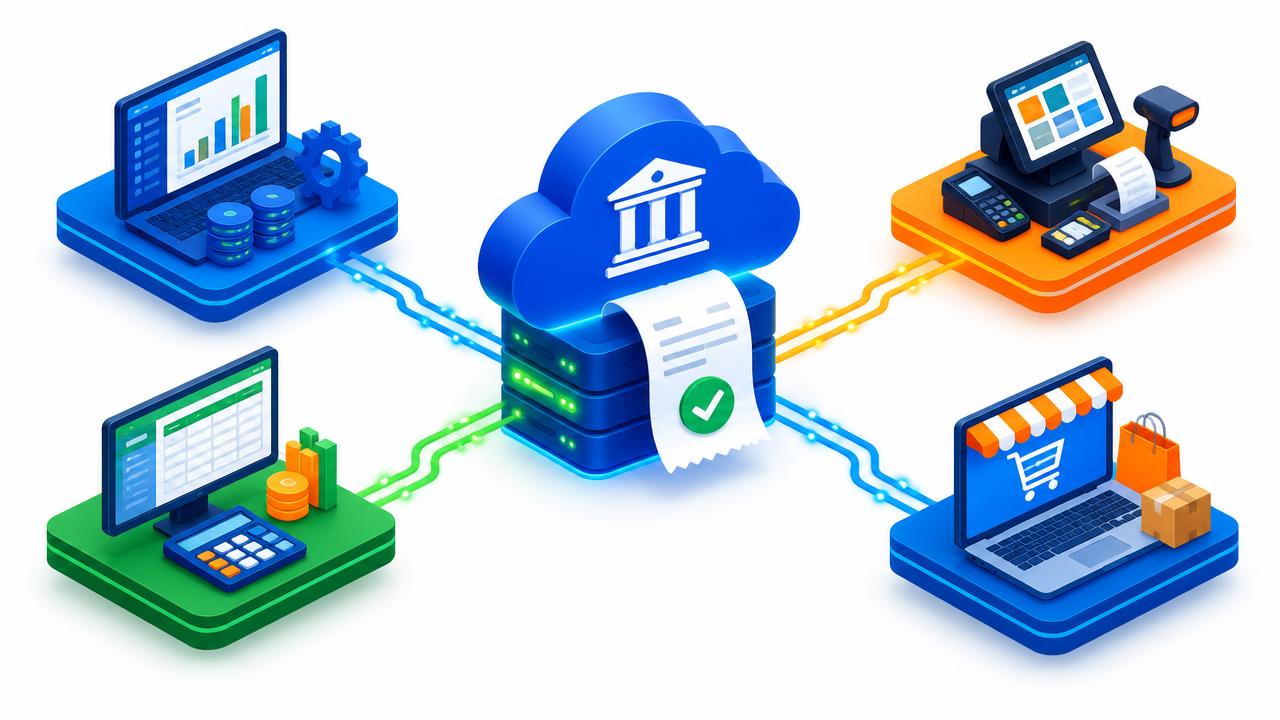
The Kenya Revenue Authority's electronic Tax Invoice Management System (eTIMS) requires businesses to issue electronic tax invoices that are transmitted to KRA. KRA offers several ways to do this, from a simple phone-based tool to full system-to-system integration. Choosing the right one saves time and avoids double entry.
The eTIMS solution family
eTIMS Lite (web and USSD)
A lightweight option for small businesses and service providers with low invoice volumes. Invoices are created manually through a web portal or USSD on a phone. No integration is needed, but every invoice is typed in by hand.
eTIMS Client
Software installed on a computer or tablet for businesses that issue invoices from one place and do not have their own billing system.
OSCU — Online Sales Control Unit
A system-to-system integration for businesses that already use an ERP, accounting package, POS or billing platform. Each invoice is sent to KRA in real time and validated online before being issued. It suits businesses with reliable internet and moderate invoice volumes.
VSCU — Virtual Sales Control Unit
A software component integrated with your system for high-volume or multi-branch businesses, such as supermarkets, distributors and utilities. It is designed to handle large numbers of transactions and can continue signing invoices during short connectivity gaps, then synchronise with KRA.
Exact eligibility rules and onboarding steps are set by KRA and may change — always confirm current requirements on the official KRA website.
Which option fits you?
- Freelancer or small service business, few invoices: eTIMS Lite.
- Single-location business without a system: eTIMS Client, or adopt a modern POS with eTIMS built in.
- Business on ERP, accounting or billing software: OSCU integration.
- High-volume retail, wholesale or multi-branch: VSCU integration.
Why integration beats manual entry
- No double entry — invoices go to KRA the moment you bill.
- Fewer errors — item codes, tax rates and customer PINs come from your system.
- Stock accuracy — integrated inventory updates as you sell.
- Audit-ready — every invoice has a KRA control number and QR code linked to your records.
- Customer trust — buyers need valid eTIMS invoices to claim expenses, so compliant suppliers win business.
What an integration project involves
- Assessment — map your invoicing, credit notes, branches and item catalogue.
- Registration — complete eTIMS onboarding on KRA's portal for the chosen solution.
- Item and tax mapping — classify products with the correct item codes, units and tax types.
- Development and sandbox testing — connect your system to KRA's test environment and pass the required test cases.
- Go-live — switch to production credentials, train staff and monitor the first invoices.
Systems we integrate
Enet connects custom ERPs, POS systems, WooCommerce, WHMCS and in-house billing platforms to eTIMS. See KRA eTIMS integration, the WHMCS eTIMS module and our eTIMS-ready POS. Operating in Tanzania too? We also integrate TRA VFD.
For background on why eTIMS matters, read our earlier article on eTIMS for Kenyan businesses, then talk to our integrations team.
Share this article
Was this article helpful?
Your vote helps us write better guides.