
Enet Online Solutions Targeted by Suspected Chinese Domain Registration Scam
Enet Online Solutions received an unsolicited email claiming that a Chinese company intended to register “enet” under several Chinese domain extensions. The message matches a widely reported domain-registration solicitation pattern. Here is the email, what it claims, and how businesses can protect themselves.

On this page
Enet was also targeted. This article describes an unsolicited email sent to Enet Online Solutions Ltd itself. We are sharing it so other businesses can recognise the same kind of message.
What happened
Enet Online Solutions Ltd has received an unsolicited email from an individual identifying himself as Kevin Liu of an organisation using the domain cnnetregistry.com.
The sender claims that a company named “Dekang Ltd” submitted an application on 12 November 2026 to register “enet” as an internet keyword and under several Chinese domain extensions.
The email asks whether Dekang Ltd is an Enet distributor in China. It suggests that the sender has identified a conflict with Enet’s company name or trademark.
We have reviewed the message and found that it closely matches a domain-registration solicitation pattern that has been reported by other organisations. Such messages commonly create concern that a third party is about to register a business’s name in China, then invite the recipient to engage with the sender about protecting the brand through domain registrations.
Enet is sharing this example to raise awareness. Businesses should independently verify any such claims and should not feel pressured to purchase domains or services from an unsolicited sender.
Original email received by Enet
The message below is reproduced exactly as it reached us — wording, spelling, punctuation, names, dates, domain names, telephone numbers and address are unchanged. It is shown as text, not as a screenshot, and contains no links.
(Please Kindly send this email to your CEO because this is urgent. If you consider this has been sent to you in error, please just ignore it. Thank you.)
Dear CEO,
We are the domain registration and solution center in Shanghai, China. Dekang Ltd submitted an application on November 12, 2026. They want to register "enet" as their internet keyword and Chinese domains (enet.cn, enet.com.cn, enet.net.cn, enet.org.cn). But after we review it, we find this name conflicts with your company name or trademark. To resolve this issue better, it's necessary to send a message to you and ascertain if Dekang Ltd is your distributor in China?
Best regardsKevin Liu
General Manager
Domain Registrar
Tel: +86-2161918696 Fax: +86-2161918697 Mob: +86-13816428671
12F Kaike Building, No. 1801 Hongmei Road, Shanghai 200233, China
What the email claims
These are the sender’s claims. None of them has been verified by Enet.
- The sender says it is a domain registration and solutions centre in Shanghai, China.
- It claims that “Dekang Ltd” submitted an application on 12 November 2026.
- It says the applicant wants to register “enet” as an internet keyword and register:
enet.cnenet.com.cnenet.net.cnenet.org.cn
- It claims that “enet” conflicts with Enet’s company name or trademark.
- It asks Enet to confirm whether the applicant is its distributor in China.
The email does not provide an application reference, an official registry notice, a verifiable trademark record or any independent evidence supporting the alleged application. The email alone does not prove that the named applicant has applied for these names.
Why it is suspicious
A. Unsolicited brand-conflict warning
The email introduces an unexpected threat involving a business name and foreign domain registrations, even though there is no established relationship between Enet and the sender.
B. Urgency and escalation
The opening asks the recipient to send the message to the CEO “because this is urgent”. This is designed to encourage escalation and a quick response.
C. A question that invites engagement
The sender asks whether the alleged applicant is Enet’s distributor. A simple question like this can prompt the recipient to reply and begin a conversation.
D. No supporting evidence
There is no application ID, official registry case number, documentary evidence or other verifiable detail proving that the alleged application exists.
E. Potential sales pressure
A commonly reported pattern is to create concern about losing a brand name, then offer to register the same domains for the recipient. This particular email has not made such an offer — but a reply is usually what opens that conversation.
F. The sender’s website refuses access
A genuine registrar normally runs a public website where customers can see who it is, which registries accredit it and how to contact it. When Enet visited http://cnnetregistry.com/ on 13 November 2026, the server replied only with a “403 Forbidden” error: “Access to this resource on the server is denied!”
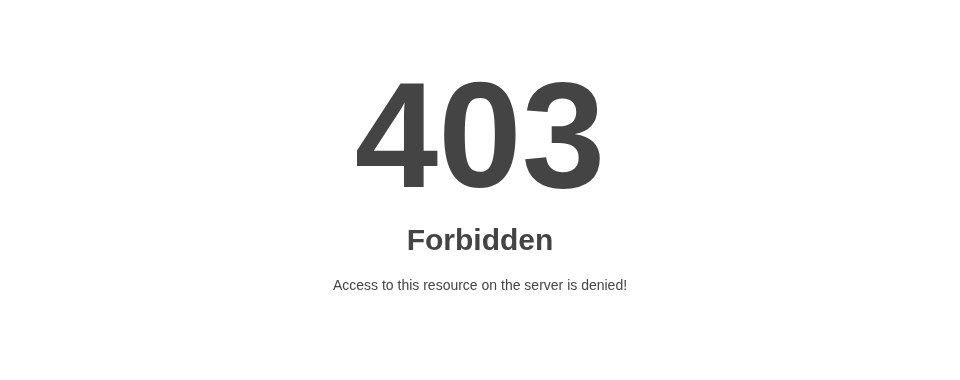
cnnetregistry.com showed Enet on 13 November 2026 (Nairobi time).An error page can have ordinary causes, such as access being restricted by country. But it means there was nothing on the sender’s own website that we could use to confirm the organisation exists or is accredited — one more reason not to rely on the email.
G. WHOIS records show a young, disposable-looking domain
We looked up the public WHOIS record for cnnetregistry.com on 13 November 2026:
- Registered: 12 December 2025 — the domain is less than a year old.
- Expires: 12 December 2026 — registered for the minimum one-year term.
- Registrar of record: Xin Net Technology Corporation (IANA ID 120).
- Name servers:
ns11.xincache.comandns12.xincache.com.
A long-established registrar would normally hold a domain that is many years old and renewed well into the future. A domain registered recently, for the shortest possible term, fits the pattern of a throwaway identity: cheap to create, easy to abandon once it is reported. The young registration date also matches Hoxhunt’s finding that the names and companies behind this campaign change while the template stays the same.
The domain’s registrar of record lists an abuse contact ([email protected], +86.4008182233). If you receive a similar email, you can report it to the genuine registrar — but find the abuse address on the registrar’s own official website rather than trusting any contact details inside the suspicious email itself.
What the email authentication results mean
We checked the message headers. They show:
- SPF: pass
- DKIM: pass
- DMARC: pass
- Our receiving mail system accepted the message over an encrypted (TLS) connection.
These results mean the message genuinely came from mail servers authorised by the sender’s own domain, and that its signed content was not altered in transit. In other words, the email does not appear to be spoofed.
Passing SPF, DKIM and DMARC does not prove that the sender is a legitimate registrar, that the alleged application exists, or that anything in the email is true. Authentication confirms who sent a message, not whether its content is honest.
You can run the same checks on any suspicious message with our free Email Header Analyzer, which works entirely in your browser. To understand when authentication does catch forged senders, read our guide to email spoofing and domain impersonation.
The wider reported pattern
Enet’s review found public reports describing very similar unsolicited messages. Security-awareness company Hoxhunt, for example, describes a long-running domain registration phishing attack in which a business is told that another company has applied to register Chinese domains that conflict with its name. The example Hoxhunt analysed was also sent from cnnetregistry.com, under a different sender name, and asked for the message to be forwarded to the CEO. Hoxhunt reports that the names and company used may change while the template stays the same, and that a reply is typically followed by pressure to register the domains for a fee.
Some important limits on what we are saying:
- This is a reported pattern. We have not independently verified every report or the identity of the sender.
- We are not claiming that “Dekang Ltd” is a real company, or that any application was actually filed.
- Our email appears consistent with the reported pattern; that is an assessment, not a legal finding.
Registrations under .cn are overseen by the China Internet Network Information Center (CNNIC). Anyone who wants to check a Chinese domain’s status can do so through official or independently chosen channels, not through the sender of an unsolicited email.
How businesses can protect themselves
- Do not reply immediately to unsolicited domain-conflict warnings.
- Do not click links or open attachments from an unknown sender.
- Do not provide company registration documents, identity documents, passwords, account details or confidential business information.
- Do not purchase domains from the sender merely because the email creates urgency.
- Check independently. Look up domain availability and registration status using a trusted registrar or the relevant official registry. Our WHOIS lookup and domain search are a quick starting point.
- Take proper advice. If your brand matters in China or another market, consult a qualified trademark professional and an established domain registrar that you choose yourself.
- Preserve the evidence. Keep the original email and its full headers for investigation.
- Report it. Send similar messages to your email provider or security team. A good incoming spam filter stops many of these before they reach staff.
- If you have already responded or shared information, review what was disclosed and take appropriate account-security or legal advice.
Domain scams come in several forms. Unsolicited “renewal” invoices are another common one — see how to spot fake domain renewal notices.
Enet’s position
Enet Online Solutions Ltd does not endorse the sender or the claims made in this unsolicited email. We have not established that the alleged domain application exists. We are publishing this example to help other businesses recognize suspicious domain-registration solicitations and verify such claims independently before taking action.
Enet recommends that businesses use trusted, independently selected domain registrars and qualified trademark advisers when protecting their brands internationally.
An unsolicited email claiming that another company is about to register your brand does not, by itself, establish a genuine threat or legal conflict. Take time to verify the claim independently. Do not let urgency push you into buying domain names or sharing sensitive information.
Enet Online Solutions was also targeted by this type of message. We encourage businesses, entrepreneurs and domain owners to share this warning with colleagues who may receive similar emails.
Share this article
Was this article helpful?
Your vote helps us write better guides.